
Guiding Philosophies
The Sacred Oak Way is a philosophy and approach that restores Village life and honors the way of the child.
It is a living educational approach designed to support children and families in growing strong, capable, regulated, and deeply connected - to themselves, to others, to nature and to real life.
It is rooted in sovereignty, creativity, warriorship, conscious parenting, and village‑based support.
The Acorn & the Oak - Child as SacredEach child carries an innate essence, intelligence, and direction. Like an acorn already holding the oak within it, children already have what they need to grow into who they are. Our role is not to shape or control them - it is to protect the conditions that allow their nature to unfold.
Children lead the way. Their rhythms, interests, curiosities, and passions guide what emerges. We do not force circles, rituals, or participation. We offer invitations, check-ins, and openings - and we trust children to engage when they are ready.
Trust the Child - Intrinsic Motivation, Autonomy, and Self-GovernanceChildren are capable and wise. We allow mistakes, experimentation, struggle, and meaningful risk. We step in when invited, when safety requires it, or when our support will deepen learning. We are inspired by child-led approaches (including the stance of ‘hands down, mouths closed, ears/eyes/heart open’) — where adults observe rather than control, so children can explore, create, take risks, and reflect through their own discoveries.
Slow Rhythms & White Space - Spacious Days, Sacred BoredomWe honor slow growth. Learning and healing need time to play, feel, create, and integrate. Sacred Oak protects white space for rest, reflection, and wonder. From the outside it may look like ‘lazy parenting.’ When you see adults lounging, reading, or not entertaining children - it is purposeful. We do not fill children’s time. We create space for boredom and self-initiated projects to emerge.
Secure Relationships First - Attachment, Belonging, and SafetyLearning flourishes when children feel safe, seen, and connected. We begin by building belonging and trust. We take time to settle, to find roots, and to create a relational culture where every child feels held.
Adult-child trust comes first. The bond is the ground of all growth.
Nervous System Informed CareAdults do the inner work. We take responsibility for our nervous systems, emotional patterns, and projections. We meet emotion before instruction. Connection before correction.
Sacred Oak uses a strong relational stance: adults co-regulate, offer presence, and model healthy emotional processing. Because emotion is part of learning, every learning space includes emotional support.
We use shared tools and language to respond with patience, clarity, and grace.
Project-Based, Real-Life Learning - Responsive to Who They AreLearning happens through real projects, creations, inventions, and responsibilities - often rooted in the land, the community, and the child’s interests. Projects are responsive, not pre-packaged.
Children experience mentorship, collaboration, excursions, and hands-on builds. They learn by doing meaningful work with real tools and real purpose.
Environment as the Third Teacher - The Space Does the Heavy LiftingRather than directing children constantly, we design environments that invite engagement: rich zones, real tools, beautiful order, open-ended materials, and clear access systems.
If the adults look ‘lazy,’ it’s often because the environment is working. There is a time to be engaged, responsive, and help children go deeper - and there is a time to step back and protect their space. Adults observe, listen, and choose their moments.
Rich Materials & Real Tools - Beauty, Quality, and StewardshipWe invest in rich, meaningful materials: real tools, building resources, art materials, nature-based equipment, and open-ended invitations. We prioritize local sourcing, reuse, repurpose, and donation where possible - teaching stewardship and gratitude.
Materials are an invitation into competence, independence, creativity, and depth.
Real Dopamine, Not Artificial Stimulation We counter modern attention collapse by prioritizing real dopamine: effort, creation, adventure, mastery, contribution, and connection. We keep clear screen boundaries and build a culture where real life is compelling enough that the artificial glow loses its pull.
How Sacred Oak Works Day to Day
Sacred Oak days are intentionally simple and spacious. Children move between self‑directed play, projects, movement, and mentorship.
Adults observe deeply, respond intentionally, and intervene only when support adds depth or safety. There are moments of focused engagement and moments of stepping back. Both are essential. Children are trusted to govern themselves within clear expectations.
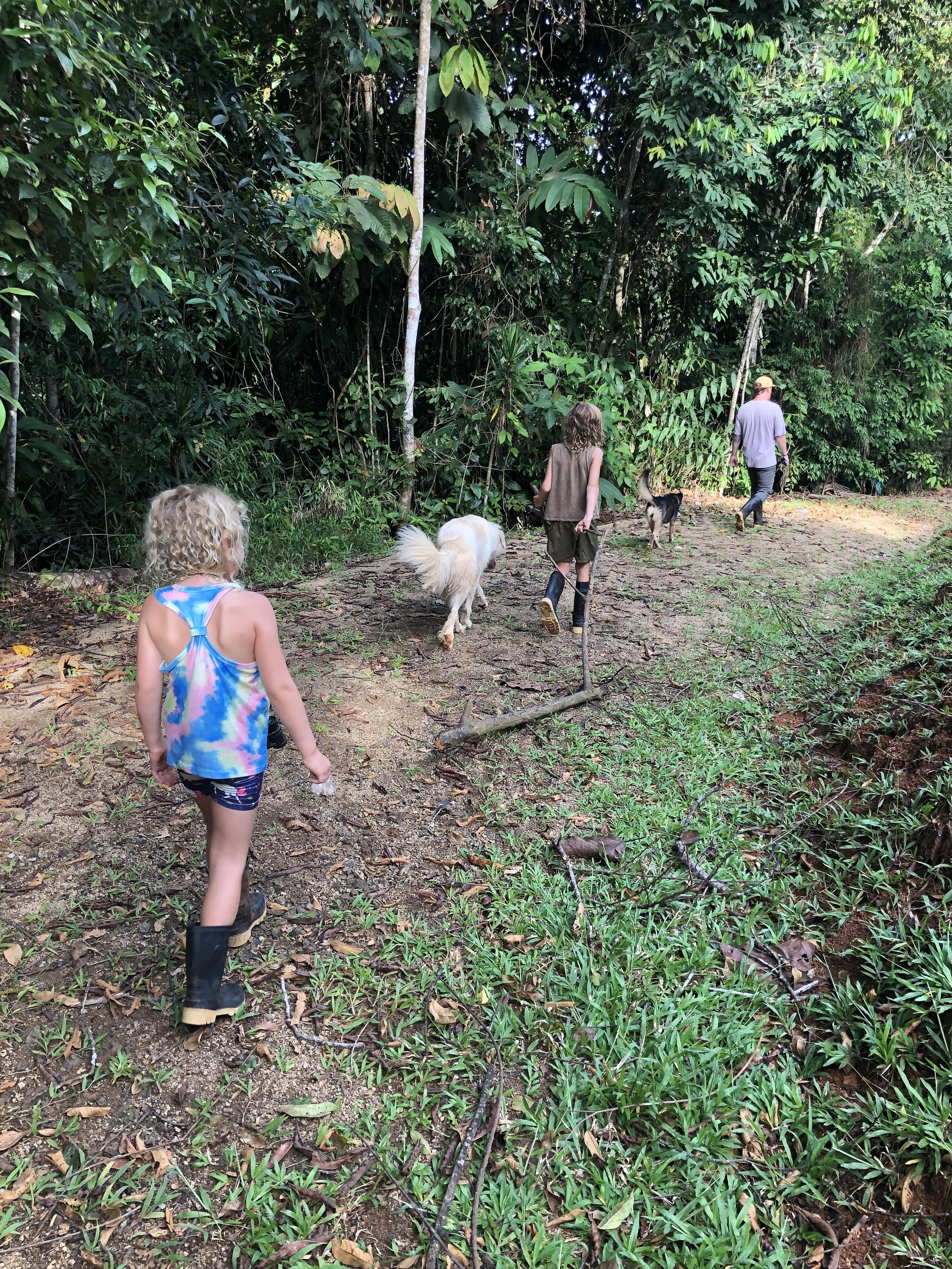
Children learn and live in multi-aged community. They move freely together - roaming, creating, playing, building, and engaging side by side across ages. This mirrors real village life, where learning naturally happens through observation, collaboration, and shared experience.
At the same time, adults are supported through developmental groupings. These groupings are not for separating children, but for helping parents and guides understand how to best hold space for different stages of growth - socially, emotionally, and developmentally
Wildlings (Ages 4–6)Focus on belonging, attachment, play, imagination, movement, and sensory exploration. No forced academics. Learning unfolds through play and rich invitations.
Wayfinders (Ages 7–10)Children complete monthly projects independently or collaboratively, building pride and confidence. Rich invitations, materials, experiences offered to deepen their interests and allow each child to shine.
Warriors (Ages 11+)Focus on purpose, leadership, contribution, and mastery through mentorship, real responsibility, and service.
Warriors Work towards a Rite of Passage Ceremony.